Retrolef: A Vintage Sans Serif Font for Handmade Labels & Printables
If you’ve ever spent hours searching for a font that feels like stepping into a cozy antique shop—where every letter has warmth, presence, and quiet confidence—you’ll understand why Retrolef landed on my design desk and hasn’t left since. As someone who handmakes greeting cards, designs printable planner pages, cuts vinyl stickers for small-batch candles, and creates wedding welcome boards for local couples, I need fonts that do more than look pretty. They need to cut cleanly on my Cricut, hold up at 12pt on a product tag, and still carry emotional weight in a digital mockup. Retrolef delivers all of that—and it does it with unmistakable vintage charm.
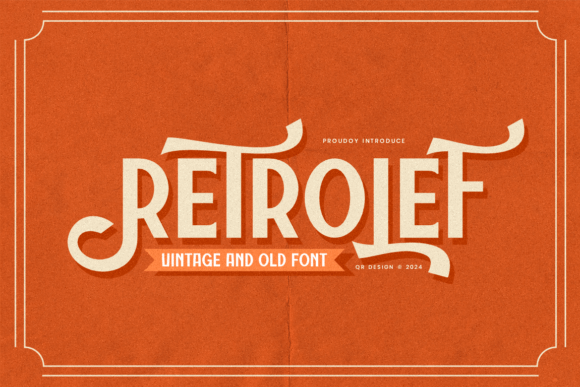
Retrolef is a sans serif font, but don’t let that word fool you. It’s not minimalist or sterile. Instead, it’s a bold, expressive display font built with subtle irregularities—the kind you’d find in hand-set metal type from the early 1900s. The letters have generous x-heights, strong vertical stress, and just enough character in their curves to feel human-made. There’s no frilly script here, no ornate serifs—but there’s undeniable personality. It’s the kind of typeface that makes “Small Batch • Hand-Poured” on a soy candle label feel intentional, trustworthy, and quietly nostalgic.
I reach for Retrolef most often when designing for tactile, physical products. Its bold weight ensures crisp cuts on vinyl and paper—even at sizes as small as 8–10pt on hang tags or jar labels. On matte-finish sticker sheets? It holds its shape beautifully. On kraft paper wedding menus or rustic burlap gift tags? It adds authenticity without shouting. And because it’s a clean sans serif, it scales effortlessly: large enough to command attention on a farmhouse-style wall sign, refined enough for delicate foil-stamped boutique packaging.
Here’s where Retrolef shines in real projects:
- Candle & soap labels: Paired with a soft handwritten font for ingredients or scent notes, Retrolef anchors the brand name with timeless clarity.
- Wedding stationery: Use it for “Mr. & Mrs.” on invitation suites or “Welcome” on acrylic signage—it reads instantly, even from across a garden venue.
- Digital printables: Planner covers, habit trackers, and printable wall art gain instant cohesion when Retrolef sets the title or section headers.
- Svg bundles for crafters: Its sturdy letterforms convert reliably to vector paths, making it ideal for layered SVG files used in cutting machines.
- Seasonal product packaging: Think “Holiday Spice Blend” on muslin bags or “Spring Herb Sachet” on linen tags—Retrolef gives seasonal items staying power beyond the calendar.
Readability matters—not just for customers, but for your production workflow. Retrolef avoids tight kerning traps and overly condensed characters, so it previews accurately in Canva, Silhouette Studio, and Adobe Illustrator. I’ve tested it down to 6pt on thermal printer tape (for tiny jewelry tags) and up to 200pt for laser-cut wooden signs—and each time, it rendered cleanly, with no unintended overlaps or fragile terminals.
Font pairing is where Retrolef truly becomes versatile. Because it’s a confident sans serif, it balances beautifully with softer contrast. Try it with a relaxed script font for names or quotes—think flowing cursive “Emma & James” beneath bold Retrolef “2025”. Or pair it with a gentle serif font like Playfair Display for body text in invitation suites—creating hierarchy without visual competition. For modern-rustic branding, combine Retrolef headlines with a neutral geometric sans (like Montserrat Light) for fine print—keeping everything legible and commercially polished.
When working with Retrolef, I always check what’s included in the download: standard OpenType (.otf) and TrueType (.ttf) files for broad compatibility, plus any stylistic alternates or ligatures. While the base set is intentionally focused (no swashes or decorative extras), that restraint is part of its strength—it’s designed for clarity first, ornament second. If multilingual support matters for your audience (e.g., French accents for artisanal food labels or Spanish phrases for bilingual greeting cards), verify coverage before purchase—but for English-language craft businesses, Retrolef covers extended Latin characters thoroughly.
One practical note many makers overlook: commercial font licensing. Retrolef is a premium font intended for commercial use—but double-check the license terms before bundling it into editable Canva templates, selling SVG files, or printing it directly onto mugs, tote bags, or t-shirts. Most reputable sellers grant broad commercial rights, including use in physical products and digital downloads—but never assume. When in doubt, reach out to the designer or vendor. Protecting your small business means respecting the creative labor behind every typeface you rely on.
Retrolef isn’t just another retro font. It’s a tool that helps handmade brands speak with consistency and warmth—whether that’s through a hand-stamped tea towel label, a downloadable baby shower printable, or a chalkboard-style café menu. It doesn’t try to be everything; it’s a focused, reliable, vintage-inspired sans serif font built for makers who value both aesthetics and execution. In a world full of fleeting trends, Retrolef feels like coming home—to craftsmanship, intention, and the quiet power of well-chosen type.